
Buying a Cemetery Plot in Naples and Fort Myers
- Legacy Options

- 2 days ago
- 6 min read
Buying a cemetery plot in Naples or Fort Myers is a practical decision with lasting consequences — one most families face only once, often under time pressure. Knowing the available plot types, what the purchase price covers, and how ownership transfers before any paperwork is signed prevents costly surprises and protects the family's options.
This guide covers the full arc of the purchasing decision: plot types and burial space categories, itemized costs, the right of interment, pre-need versus at-need timing, and the questions every family should put to a cemetery in writing before committing.
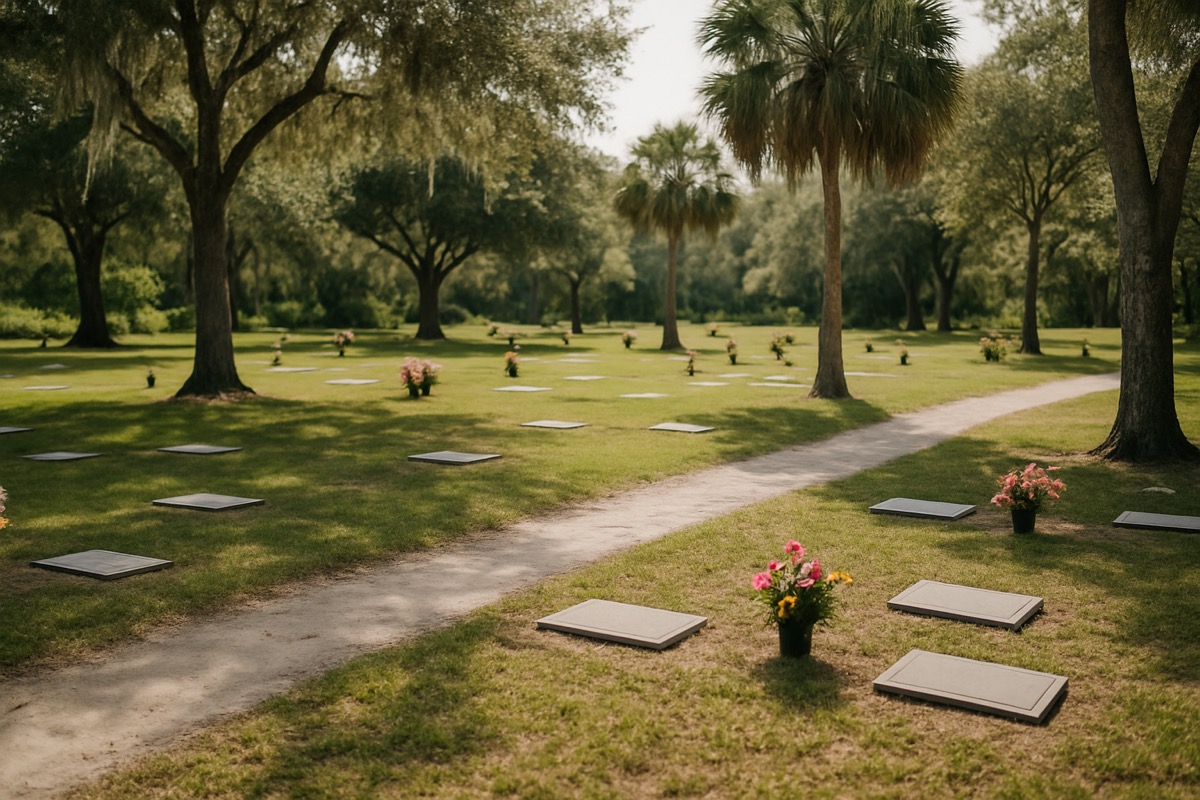
Cemetery Plot Types in Southwest Florida
Cemeteries in the Naples and Fort Myers area offer several distinct burial space categories, and not every cemetery carries all of them.
A single plot accommodates one full-casket burial — the most common unit sold. A companion or double-depth plot holds two caskets, typically side by side or stacked, and is frequently selected by couples purchasing together. A family plot is a reserved multi-space section that keeps multiple generations in one area of the grounds, often with a shared monument.
Lawn crypts are pre-poured reinforced concrete chambers installed below grade at construction; they fulfill burial-vault requirements and are common at Southwest Florida cemeteries where the high water table makes traditional graves impractical. For above-ground interment, a mausoleum crypt holds a casket inside a permanent stone or granite structure. A columbarium niche is a smaller above-ground compartment sized for an urn — the appropriate space when cemetery interment is planned for cremated remains. Some cemeteries also offer dedicated cremation gardens, in-ground sections designed specifically for urn burial.
What the Purchase Price Includes — and What It Does Not
A cemetery's quoted plot price conveys the right to use the space. It rarely covers every cost of interment. Families should request a full itemized fee schedule before signing.
Costs typically billed separately from the plot price:
Opening and closing fee — labor to excavate and fill the grave on the day of interment; charged per burial, including for cremated remains
Burial vault or grave liner — most cemeteries require one to prevent ground subsidence; may or may not be bundled; at lawn-crypt locations, the crypt fulfills this requirement
Perpetual care assessment — funding for ongoing grounds maintenance; sometimes embedded in plot price, sometimes a separate line item
Monument installation fee — setting a headstone or upright marker carries a labor charge at most cemeteries, independent of the marker's cost (headstone selection is a separate decision handled with a monument company)
Saturday or holiday interment surcharge — many cemeteries add a premium for weekend or holiday opening-and-closing services
A reputable cemetery provides this breakdown without hesitation. Getting it in writing before purchase is standard practice and protects the family from unexpected charges at the time of need.
Cemetery Plot Ownership: The Right of Interment
Purchasing a cemetery plot does not transfer ownership of the land. The legal instrument conveyed is a right of interment — the exclusive right to bury in that specific space — while the cemetery retains fee-simple title to the property. This distinction matters for transfers and estate planning.
The right of interment can generally be passed to a family member through an estate or transferred to another individual through private sale, but the specific process and associated fees vary by cemetery. Some cemeteries repurchase unused rights directly; others permit only private transfers with a notarized deed of assignment and a cemetery transfer fee. Families should request the cemetery's written transfer policy before purchase, not after.
In Florida, pre-need cemetery contracts fall under state regulation administered by the Florida Department of Financial Services. Statutory consumer protections cover required escrow of purchase funds, price guarantees, and refund rights. The cemetery's office can reference the applicable Florida statutes; the funeral home coordinating arrangements can also walk families through current requirements.
Pre-Need vs. At-Need: When the Purchase Happens
Pre-need purchasing — buying a burial space before a death occurs — gives families uninterrupted time to visit multiple cemeteries, compare plot locations within the grounds, ask detailed questions, and make a deliberate choice. Pre-need prices are sometimes lower than at-need rates; many cemeteries offer installment payment plans. Securing a burial space is one of the most concrete components of planning ahead and removes the decision from the list of items surviving family members must resolve under immediate pressure.
At-need purchasing occurs after a death, when a burial space is needed within days. Cemeteries and funeral homes are accustomed to moving quickly, but the compressed timeline limits comparison shopping and can make it harder to ask all the right questions. Families navigating at-need cemetery selection benefit from having a funeral home manage the logistics directly with the cemetery so nothing is missed.
Questions to Ask Every Cemetery Before Signing
Cemetery rules, fee schedules, and restrictions vary widely. These questions should be asked of each cemetery — and answered in writing:
What is included in the plot price, and what fees are billed at the time of interment?
Is a burial vault or grave liner required? Can it be sourced from an outside vendor?
Does the cemetery use lawn crypts? What does that mean for opening-and-closing costs?
What are the rules for grave markers — permitted size, materials, and installation requirements?
What is the process for transferring or reselling the right of interment, and what fees apply?
Is perpetual care of the grounds included in the purchase price, or charged separately?
Are there restrictions on burial type — green burial, cremated remains, specific religious practices?
What consumer protections govern this contract under Florida law?
What happens to purchase agreements if the cemetery changes ownership?
A cemetery unable or unwilling to provide clear written answers to these questions warrants caution. Established cemeteries throughout Collier and Lee County answer them routinely.

Local Factors: High Water Table, Veterans Benefits, and Denominational Grounds
Southwest Florida's water table significantly influences how burial spaces are constructed. Many area cemeteries rely primarily on lawn crypts, reinforced vaults, or above-grade mausoleum entombment rather than conventional in-ground graves. Asking specifically how a cemetery addresses water table conditions is a routine and practical question for this region.
Collier and Lee Counties include faith-affiliated cemeteries with religious-use requirements, non-denominational memorial parks, and veterans cemeteries. Veterans and their spouses may qualify for interment at Florida National Cemetery in Bushnell or at other veterans' burial facilities at no cost for the plot itself. Eligibility and available benefits can be confirmed through the cemetery's veterans services contact or through the funeral home coordinating arrangements.
Green Burial and Cremation Interment Options
Natural or green burial — interment in a biodegradable shroud or simple wood casket without embalming or a concrete vault — is available at select Southwest Florida cemeteries. Not all local cemeteries accommodate it, and those that do may restrict it to designated sections of the grounds. Families interested in green burial should confirm availability and any plot-selection restrictions before purchasing.
Cremation does not preclude cemetery interment. Cremated remains can be buried in a standard single or companion plot, placed in a columbarium niche, or interred in a dedicated cremation garden. A named cemetery location provides a permanent place for memorialization and visitation. Florida regulates the scattering of cremated remains; families considering that option should confirm current statutory requirements with the funeral home.
How a Funeral Home Supports Cemetery Plot Selection
Cemetery selection and funeral planning typically proceed together. Our team at Legacy Options serves families throughout Collier and Lee County — explaining plot types and ownership terms, identifying the questions that matter, and coordinating with the cemetery so families are not managing those logistics on their own. Cemetery decisions fit alongside service arrangements, memorials, and all available funeral options.
These conversations move at whatever pace a family needs, whether planning is happening years in advance or under an immediate timeline.
Frequently Asked Questions
Can a cemetery plot be resold if plans change?
In most cases, the right of interment can be transferred or resold, but the process depends on the individual cemetery's policies. Some cemeteries repurchase unused rights directly at a set rate; others permit private transfers with a notarized deed of assignment and a transfer fee. Families should review the transfer terms in the purchase agreement before assuming the resale process is straightforward.
How far in advance should a cemetery plot be purchased in Naples or Fort Myers?
Many families who plan ahead secure a burial space years or decades before it is needed. Buying a cemetery plot in Naples or Fort Myers without time pressure allows families to visit multiple grounds, compare specific plot locations, and make a deliberate choice — and removes the decision from what surviving family members must handle quickly during an already difficult time.
What is the difference between a mausoleum crypt and a columbarium niche?
A mausoleum crypt is an above-ground entombment space for a full casket, housed inside a permanent stone or granite structure. A columbarium niche is a smaller above-ground compartment designed to hold a cremation urn. Both provide a sheltered, permanent location for memorialization and are available at cemeteries across Southwest Florida.
Does Legacy Options assist with cemetery selection?
Yes. The cemetery itself is a separate organization, but the team regularly helps families navigate the selection process — explaining plot types and ownership terms, identifying the right questions to ask, and coordinating with the cemetery directly so families are not managing those logistics on their own.
For questions about cemetery plots or any part of making arrangements for a loved one, the Legacy Options team is available without pressure or obligation. Call (239) 659-2009 or reach out online whenever the time feels right.


Comments