
Choosing a Headstone or Grave Marker in Southwest Florida
- Legacy Options

- 2 days ago
- 5 min read
Selecting a headstone or grave marker is a permanent decision — the memorial will stand for generations, so material, style, inscription, and cemetery compliance all require deliberate thought. In Southwest Florida's subtropical climate, those choices carry additional weight: heat, humidity, salt air, and intense UV exposure affect how different materials hold up over decades.
Legacy Options guides families through each stage of this process, from confirming cemetery rules to finalizing an inscription proof before production begins. The sections below address marker types, materials, sizing, cemetery restrictions, personalization options, and timeline so families can approach the decision with clear expectations.
Marker and Monument Types
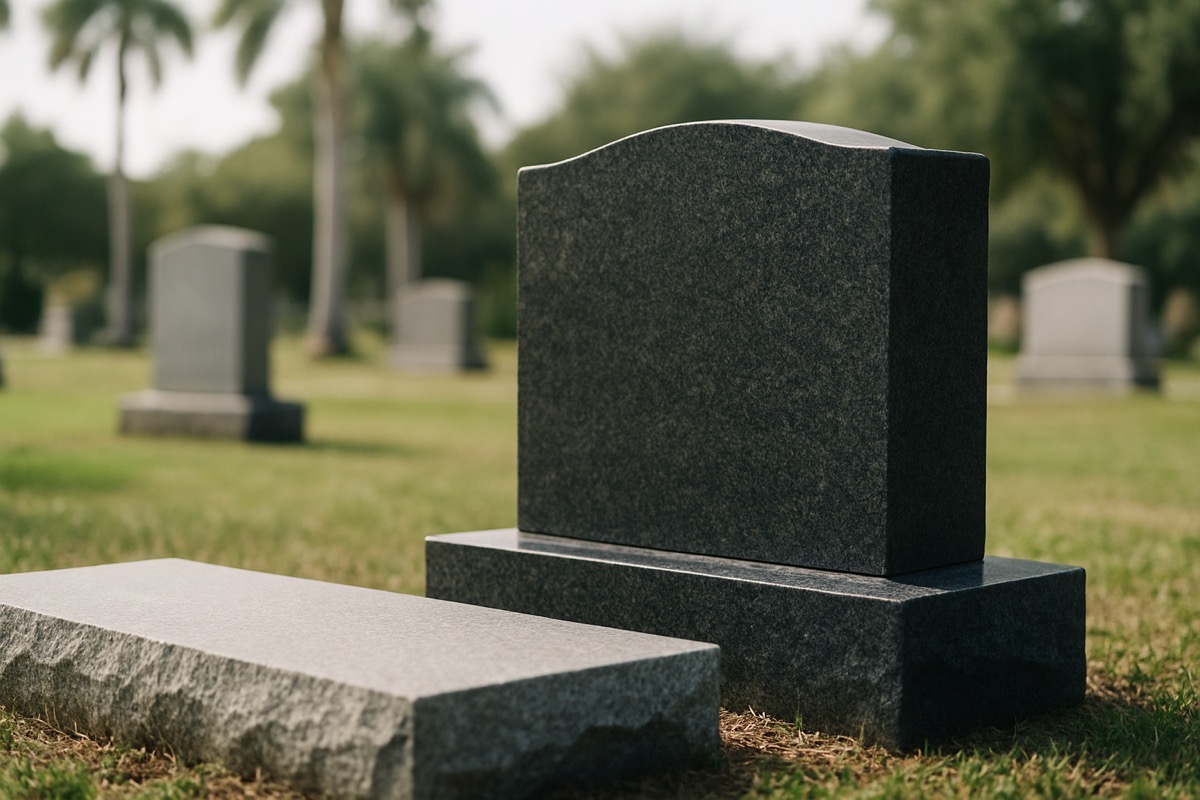
Flat or lawn-level markers lie flush with the ground. Most cemeteries permit them in all sections because they simplify mowing; they remain fully personalizable despite the low profile. Upright monuments — the traditional headstone silhouette — stand vertically and offer the greatest surface area for inscriptions, laser portraits, and sculptural details, with visibility from across the cemetery grounds.
Bronze plaques are cast-metal markers mounted on a granite base or set into a concrete foundation. Veterans' cemeteries and memorial parks use them widely; the VA provides a government-furnished bronze marker or medallion for eligible veterans at no cost, through a separate application process distinct from a private order. Ledger stones cover the full grave surface as a horizontal slab — maximum inscription space, common for family plots or when a distinctive memorial footprint matters.
Material: Granite vs. Bronze
Granite dominates Collier and Lee County cemeteries for good reason. It resists humidity, UV intensity, and coastal salt air without rusting or warping, and the color range is broad — classic grey, polished black, warm red, rose — drawn from quarries worldwide. Polished finishes hold laser-etched detail sharply; flamed or honed surfaces offer a more natural look at slightly lower reflectivity.
Bronze develops a natural patina over time; families near the coast should plan a periodic cleaning routine to slow oxidation and preserve the relief detail. The most common hybrid option pairs a granite base with a bronze plaque: the permanence of stone anchors the warmth of cast metal. Both materials are available through most Southwest Florida memorial providers; physical samples help families compare color and texture before committing.
Cemetery Rules and Compliance
Every cemetery sets its own monument regulations, and they vary significantly. Ordering a marker without first confirming those rules risks rejection at installation — a costly mistake that adds weeks to the timeline. Standard restrictions cover maximum and minimum dimensions, permitted materials (some sections allow only bronze; others only upright granite), foundation and installation method requirements, approved colors and finishes, and limits on certain design elements or emblems.
Veterans' national cemeteries and memorial parks operate under separate federal guidelines. Legacy Options is familiar with cemetery-specific rules across Collier and Lee County and can confirm compliance requirements before a style is selected, preventing incompatibility problems before an order is placed.
Inscriptions and Personalization
Standard inscriptions include full name, birth and death years, and a brief phrase — a scripture verse, a meaningful quote, or a single word such as "Beloved Mother." Religious symbols, military emblems, and heritage motifs are common additions; most granite suppliers support custom artwork as a carved or laser-etched element.
Laser etching transfers a photograph onto polished granite with precise detail — portraits, meaningful scenes, or significant imagery rendered in stone permanently. File resolution matters: ask the memorial provider for minimum pixel specifications before gathering source images. For double monuments (two-spouse markers), the second spouse's information can often be added after the first installation; confirm this capability at the time of the initial order, as it depends on material and the original manufacturer's records.
Sizing and Proportion
A marker must fit within the cemetery's permitted dimensions and proportion appropriately to the lot. Standard flat markers run approximately 24 by 12 inches, though that varies by cemetery section and state. Upright monuments range from modest 18-inch pillar styles to multi-foot family monuments. Larger markers allow denser inscriptions and richer design without crowding — a factor when personalization is extensive.
Visiting the cemetery before deciding on dimensions gives families a practical sense of scale. Observing markers installed five and ten years ago also reveals how specific materials have aged on that property — information no photograph fully replaces.
Timeline from Order to Installation
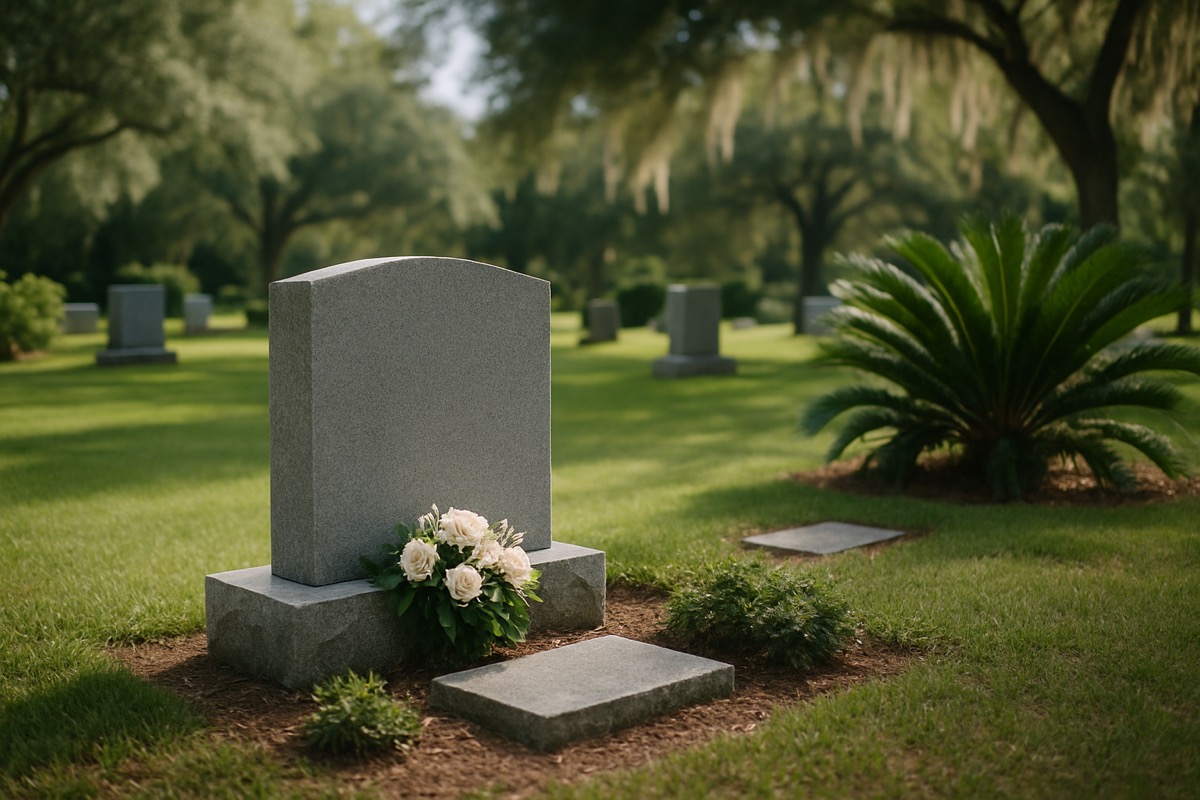
Most granite markers run six to twelve weeks from confirmed order to cemetery installation. Bronze markers follow a comparable window depending on foundry production cycles. Design complexity, material sourcing, cemetery scheduling, and seasonal demand all shift that estimate. A design proof — a digital rendering of the inscription layout — should be reviewed and approved by the family before production begins; most reputable providers include this step as standard.
No rule requires a marker to be installed within a specific period after burial. Many families wait several months before finalizing the decision. For those already planning a memorial service, our team can map a realistic marker timeline that avoids adding pressure to an already demanding process.
Questions to Ask Before Ordering
A focused checklist prevents most post-order complications:
What are the cemetery's specific rules for marker type, size, material, and foundation method?
Is a design proof provided before production begins, and what is the revision process?
Is foundation installation included in the quote, or arranged separately?
What is the estimated production-to-installation timeline for the chosen material?
Can a second inscription be added to a double marker after a future passing?
What maintenance does the material require in a coastal Florida environment?
What is the correction policy if an inscription error is discovered after production?
Families considering a full review of available arrangements, including veteran's markers through the Department of Veterans Affairs, can work through those options alongside the monument selection — the VA application and a private headstone order involve separate processes and separate timelines.
Frequently Asked Questions
How soon after a burial can a grave marker be installed?
Most cemeteries require ground settlement after an in-ground burial before a permanent marker can be set — typically six months to one year. The cemetery provides the specific waiting period for their property. Cremation niches and mausoleum plaques generally involve shorter lead times with no settlement requirement.
Can additional information be added to a marker after installation?
Often yes. A double monument ordered for two spouses can frequently receive the second set of dates and inscriptions after the second passing. Feasibility depends on the original material and the manufacturer's production records, so confirming this option at the time of the initial order is the most reliable approach.
Do cemeteries require markers to be purchased through an approved vendor?
Some cemeteries maintain approved vendor lists or require markers to meet precise dimensional and installation specifications. Others allow families to source markers independently. Confirming vendor requirements with the cemetery before ordering prevents compatibility issues and unexpected installation fees.
Can a headstone or grave marker be selected during preplanning?
Preplanning allows a person to document preferences for marker style, material, and inscription wording in advance, removing that responsibility from family members at the time of loss. When those preferences are recorded through a funeral home's preplanning arrangements, the details are preserved and immediately accessible when needed.
Legacy Options is available to answer questions about choosing a headstone or grave marker in Southwest Florida. Reach our team at (239) 659-2009 or send a message through our contact page whenever the time feels right.


Comments